
News&Articles
2026.08.19
"Mono no aware"
Embracing the Beautiful Sadness of a Japanese Autumn: The Concept of "Mono no aware"
As the harsh summer heat begins to fade, Japan transitions into autumn, one of its most beautiful seasons. While many people around the world might associate autumn with warm sweaters and hot drinks, the traditional way of enjoying a Japanese autumn is tied to a much deeper, more delicate emotion. To truly appreciate a Japanese autumn like a local, let me introduce an ancient waka poem from the Hyakunin Isshu that perfectly captures the essence of this season.
"Okuyama ni / Momiji fumiwake / Naku shika no / Koe kiku toki zo / Aki wa kanashiki"
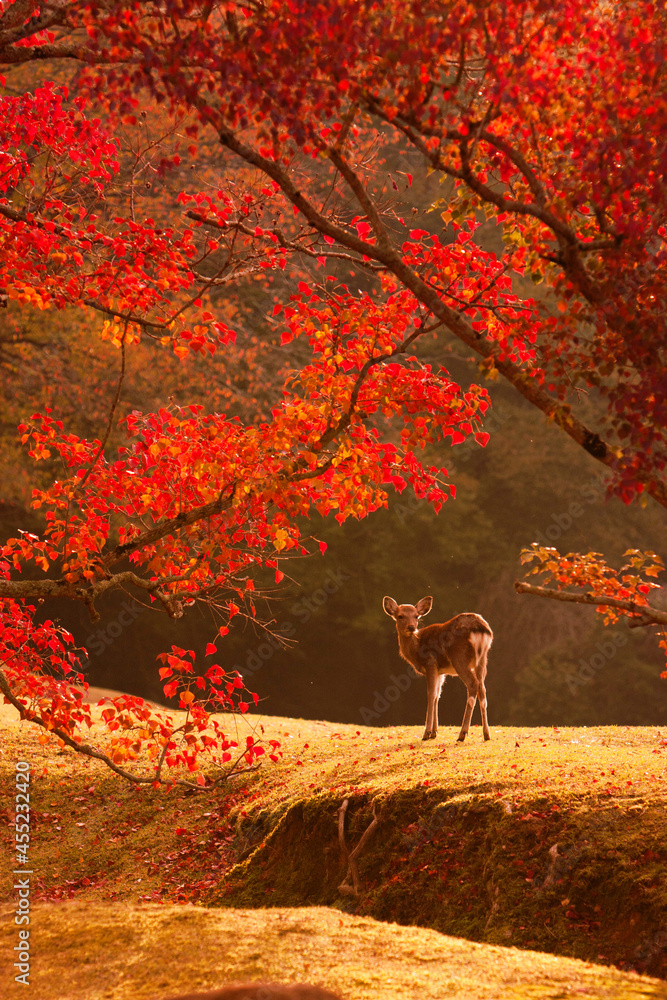
Deep in a remote mountain, walking through a carpet of fallen autumn leaves, you hear the sorrowful cry of a deer seeking its mate. It is precisely when hearing that voice that one feels the piercing loneliness of autumn.
This poem evokes a vivid scene. Imagine standing alone, deep in a quiet mountain surrounded by brilliantly colored leaves. When that silence is suddenly broken by the solitary cry of a deer, we project human emotions onto that lonely voice, wondering, "Perhaps it is calling for its mate." It is a profoundly emotional poem.
This poem was written over a thousand years ago by a poet named Sarumaru Dayu. He is celebrated as one of Japan's "Thirty-Six Poetry Immortals" (a group of 36 exceptional poets). Fascinatingly, however, there are absolutely no official records of who he actually was. He is a mysterious, legendary figure whose profound sensitivity to nature survives to this day solely through his poetry.
The sadness expressed in this poem, known as "mono no aware," should never be viewed as something negative. It is tied to a beautiful, deeply resonant aesthetic appreciation for the impermanence of all things. The vibrantly colored autumn leaves will eventually fall, and the year's warmth will come to an end. It is exactly because it comes to an end that it is so deeply cherished.
You don't need to go deep into the mountains to cultivate this sensitivity. The next time you take a walk in a local park or visit a shrine, just pause for a moment. Listen to the sound of the fallen leaves beneath your feet and feel the cold wind. When you do, I believe your autumn in Japan will become all the more enriching.