
News&Articles
2026.05.26
That is the Ajisai, blooming beautifully on the street corners
June is just around the corner in Japan, bringing with it the rainy season known as Tsuyu. Consecutive rainy days might make you feel a bit gloomy, but there is a special flower that can only be fully appreciated because of the rain. That is the hydrangea (Ajisai), blooming beautifully on the street corners and in the nature of Japan. I would like to introduce you to this beautiful flower, which is as colorful as a gemstone.
In Japanese culture, the hydrangea is not just a flower; it has been cherished as something truly special. Depending on the soil and as they bloom, hydrangeas display a variety of colors: red, blue, pink, and purple. Because of this mysterious characteristic, hydrangeas are sometimes referred to as "Nanahenge" (Seven Changes) in the world of Japanese literature and haiku. Finding beauty in its changing colors, viewing it as a symbol of transience and the shifting nature of things, is the very essence of traditional Japanese aesthetics. It is safe to say that the sight of hydrangeas quietly changing colors while being struck by the rain has inspired countless poets and artists.
Let me introduce a famous haiku. It was written by Masaoka Shiki, a relatively modern poet:
"Ajisai ya / Kinou no makoto / Kyou no uso"(Hydrangeas / Yesterday's truth / Today's lie)

This implies, "The color of the hydrangea changes one after another. It is as if yesterday's truth becomes a lie today." When I think about how he might have reached this state of mind amidst the many turbulent changes of the era he lived in, I feel it is an emotion that we, living in the modern world, can certainly relate to. What you project onto the hydrangea depends entirely on your own life and thoughts. Whether you simply admire it as a beautiful flower or feel the philosophical shifts of the times, it ultimately comes down to your own heart.
A famous hydrangea garden I personally recommend is Sankeien. Located in Yokohama, it is a traditional Japanese garden with expansive grounds. You can fully experience a traditional Japanese atmosphere, so I highly recommend it to expats and foreigners staying in Japan.
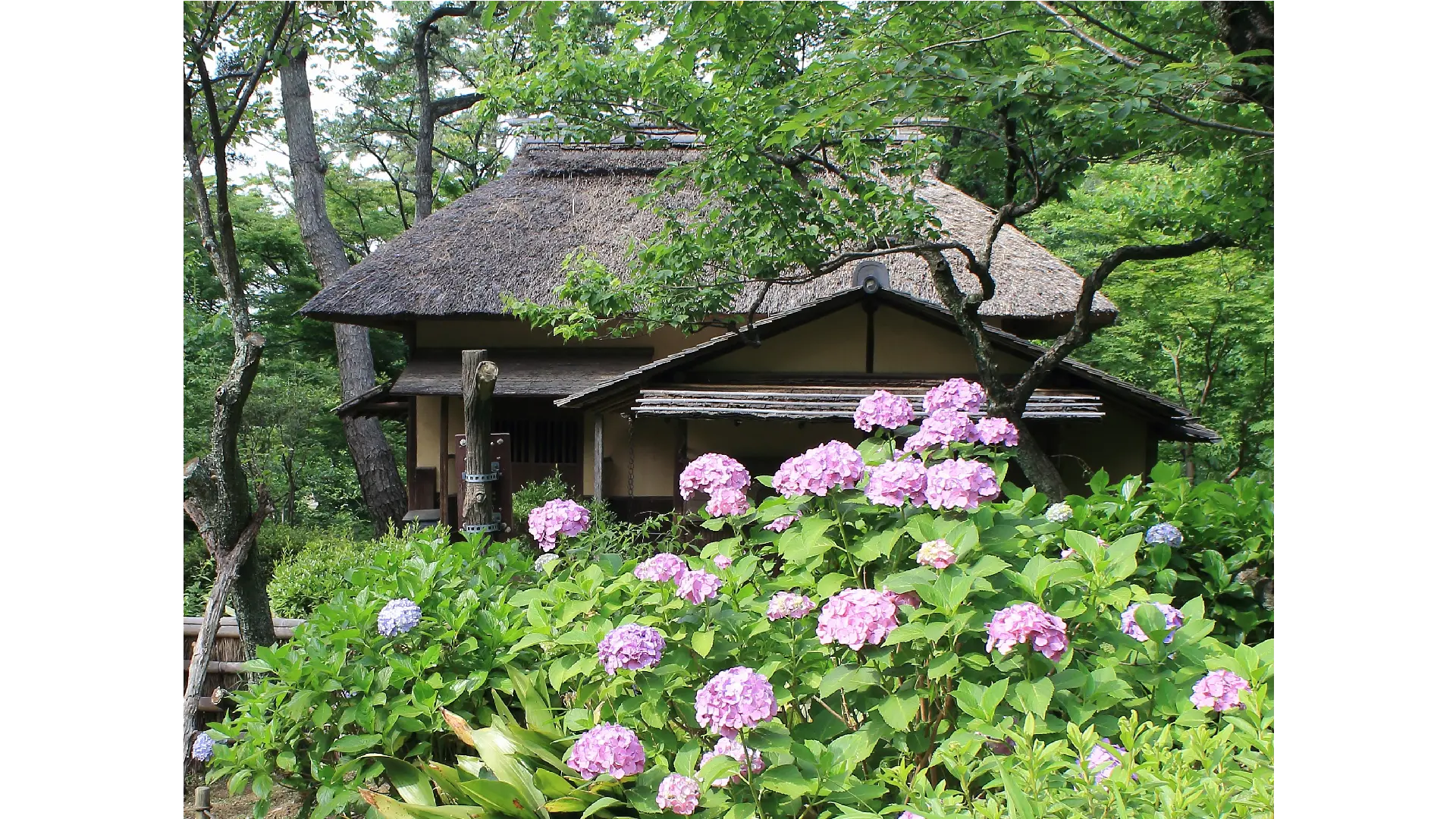
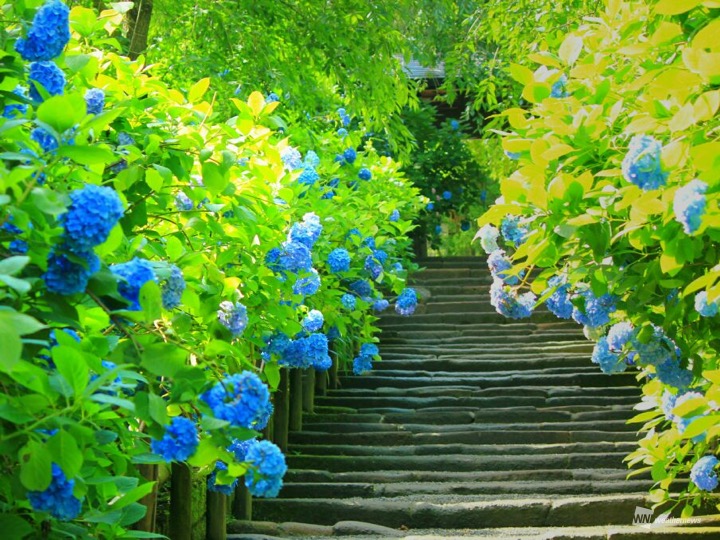
Another recommendation, located in Kamakura, is Meigetsuin. It is nationally famous as the "Hydrangea Temple," with about 2,500 Hime-ajisai (Princess Hydrangeas) filling the grounds. Its beautifully deep blue color is highly praised and known as "Meigetsuin Blue."
If you have the chance, please do visit them. When you look at the hydrangeas, what will you feel? I hope you use it as a wonderful opportunity to reflect on your own heart.