
News&Articles
2026.06.24
Brevity of Summer Nights
The Brevity of Summer Nights, Unchanged for a Millennium: Japanese Summer and Poetry through Hyakunin Isshu
Now that the summer solstice has passed, the season with the longest days and shortest nights of the year has arrived. Today, I would like to introduce a famous poem from the classical Japanese poetry anthology Hyakunin Isshu that beautifully captures the fleeting nature of nights during this time of year.
"The summer night is so brief, it breaks into dawn while it still feels like early evening. Where among the clouds might the moon be hiding?"
To translate this into modern terms: "The summer night is so short; it has already dawned while I thought it was still early evening. Having had no time to set behind the western mountains, where among the clouds might the moon be hiding right now?"
Even aristocrats 1,000 years ago captured the brevity of summer nights in such elegant poetry. The fact that people preserved their memories and sceneries in such a beautiful form long before photos or videos existed is truly a symbol of beautiful human culture, regardless of East or West.
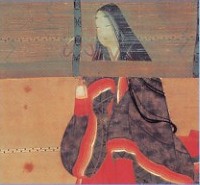
The poet who composed this verse about the short summer night and the hidden moon is Kiyohara no Fukayabu. He was a nobleman of the mid-Heian period and one of its most outstanding poets.
Furthermore, he is the great-grandfather of the famous Sei Shonagon (the author of the world-renowned The Pillow Book). His sharp, artistic sensibility was clearly passed down to his great-granddaughter. He was also a prominent figure in the literary circles of his time, maintaining close friendships with the compilers of the Kokin Wakashu (Collection of Ancient and Modern Japanese Poetry).
The fascinating part of this poem lies in its playful exaggeration—that the summer night is so short it doesn't even give the moon time to set—and the way it gives the moon a somewhat comical, character-like quality, as if it has a will of its own to go hide in the clouds.
It might be highly interesting for people from overseas to see that this short, ancient poem shares elements of personification and character-building commonly found in modern Japanese anime and manga.
Under this brief night sky, how will you spend your summer evening? I hope a fruitful and deeply restorative summer night visits each and every one of you.