
News&Articles
2026.07.28
A Unique Tradition
Surviving the Extreme Heat: A Unique Tradition
We are nearing the end of July, and the extreme heat is finally reaching its peak. It has been a bit cloudy with some rain this week. Although doing laundry is a struggle, I am personally grateful for the rain as it weakens the intense sunlight.
How is everyone surviving this heat? I’ve heard that Europe is currently experiencing a shortage of air conditioners. Areas that used to manage fine without ACs are now suffering from this abnormal heatwave. I saw on social media that construction companies and electronics stores are struggling to keep up with the rapid spike in demand. Today, I would like to introduce a slightly unusual way of staying cool that has been passed down in Japan: Kwaidan (Ghost Stories).
■ The Physiology of Fear and Coolness Speaking of Japanese summers, horror content like paranormal TV shows and haunted houses has always been a staple. Things might be changing slightly nowadays, but up until the Heisei era, there were always many horror and occult programs broadcasted every summer. People from other countries might wonder, "Why horror in the summer?" but there are actually physiological and historical reasons behind this.
When humans feel extreme fear, our sympathetic nervous system goes into overdrive. This causes our peripheral blood vessels to constrict, reducing blood flow to the skin's surface. Literally, the temperature of our body surface drops, giving us goosebumps. Japanese people of the past possessed the eco-friendly wisdom to use this chilling sensation down the spine to stay cool on hot, humid nights. As for me, on sleepless summer nights, I love immersing myself in the worlds created by my favorite horror author, Yusuke Kishi.
■ The Classic Ghost Story: "Yuki-Onna" Using fear to survive the hot Japanese summer isn't just a modern practice; it has been around since ancient times. Let me introduce a representative ghost story: Yuki-Onna (The Snow Woman). Yuki-Onna is a beautiful yet terrifying Yokai (supernatural spirit) with pale, translucent skin and long black hair who appears on snowy nights. According to folklore, she blows ice-cold breath on travelers lost in the snow, freezing them to death.
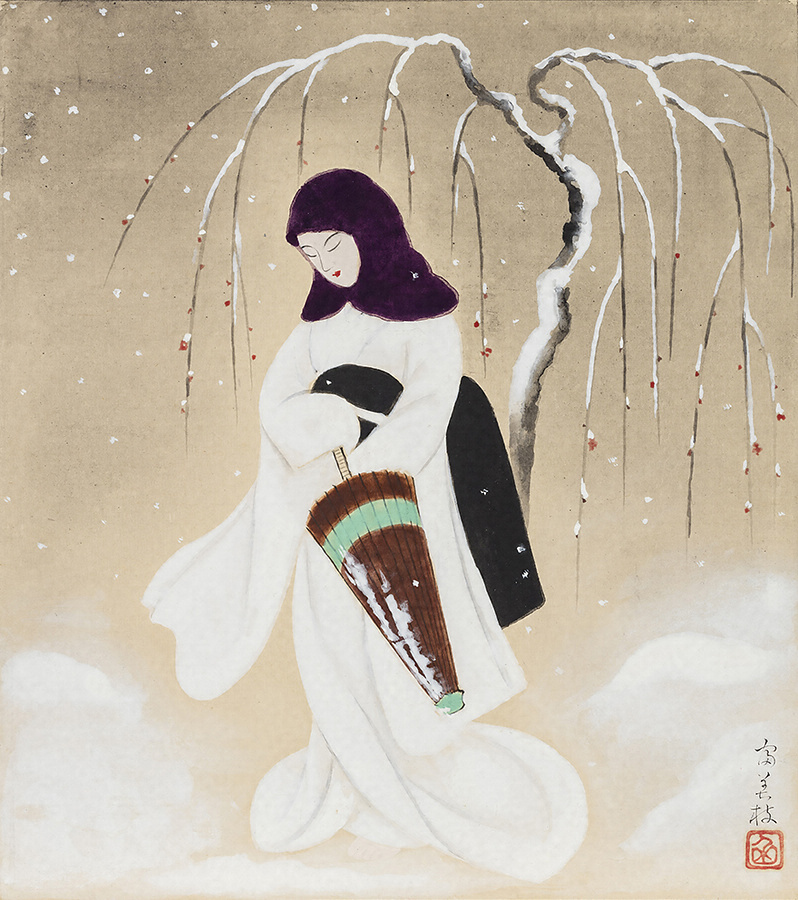
One of the reasons Yuki-Onna became famous overseas is the influence of Lafcadio Hearn (Koizumi Yakumo). His life story is incredibly fascinating, so I plan to introduce him in tomorrow's article. Just imagining a freezing blizzard and the cold gaze of the beautiful Yuki-Onna on a 35°C (95°F) tropical night makes you feel a little cooler, doesn't it?
■ Ukiyo-e and the "Gashadokuro" Yokai Ukiyo-e (woodblock prints) are another element that introduced the existence of Japanese ghost stories and Yokai to the world. Among them, the Gashadokuro (Giant Skeleton) is particularly famous. The Gashadokuro is a Yokai formed from the gathered bones of soldiers who died in battle and were left unburied.
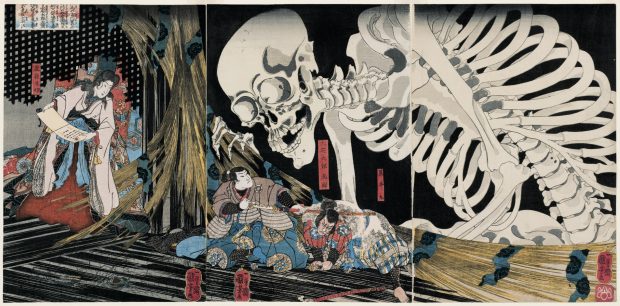
Take a look at the Ukiyo-e masterpiece titled "Takiyasha the Witch and the Skeleton Spectre" (Soma no Furudairi) by Utagawa Kuniyoshi. It is a highly dynamic composition where a terrifying giant skeleton looms out of the darkness, peering down at samurai warriors. The composition of the samurai facing an overwhelming, gigantic terror, and the Gashadokuro staring right back at them, boasts immense popularity overseas. You can often spot this exact Gashadokuro in streetwear T-shirts, skateboards, and tattoo designs all over the world.