
News&Articles
2026.09.14
A Touch of Coolness
A Touch of Coolness at the End of the Japanese Summer
The severe lingering heat has passed, and we are finally starting to feel the signs of autumn in the air. With the influence of typhoons, we are also experiencing drops in atmospheric pressure and sudden temperature changes. In Japan, there has long been a cultural tradition of sharing Kaidan (ghost stories) to send shivers down one's spine and "cool off" during the hot nights. Today, I would like to introduce one of Japan's most famous ghost stories, "Hoichi the Earless" (Miminashi Hoichi), which was introduced to the world by Lafcadio Hearn.
The Blind Biwa Player and the Vengeful Spirits of the Heike Clan Hoichi was a blind biwa (Japanese lute) player who lived in a temple. He was a master at chanting The Tale of the Heike, an epic depicting the tragedy of the fallen Heike warrior clan. His sorrowful performances were so moving that they were said to make even the dead weep. One day, he was invited by a mysterious samurai to perform for a person of high nobility. Night after night, Hoichi went to deliver passionate performances, completely unaware that his audience was actually the vengeful spirits of the Heike clan.
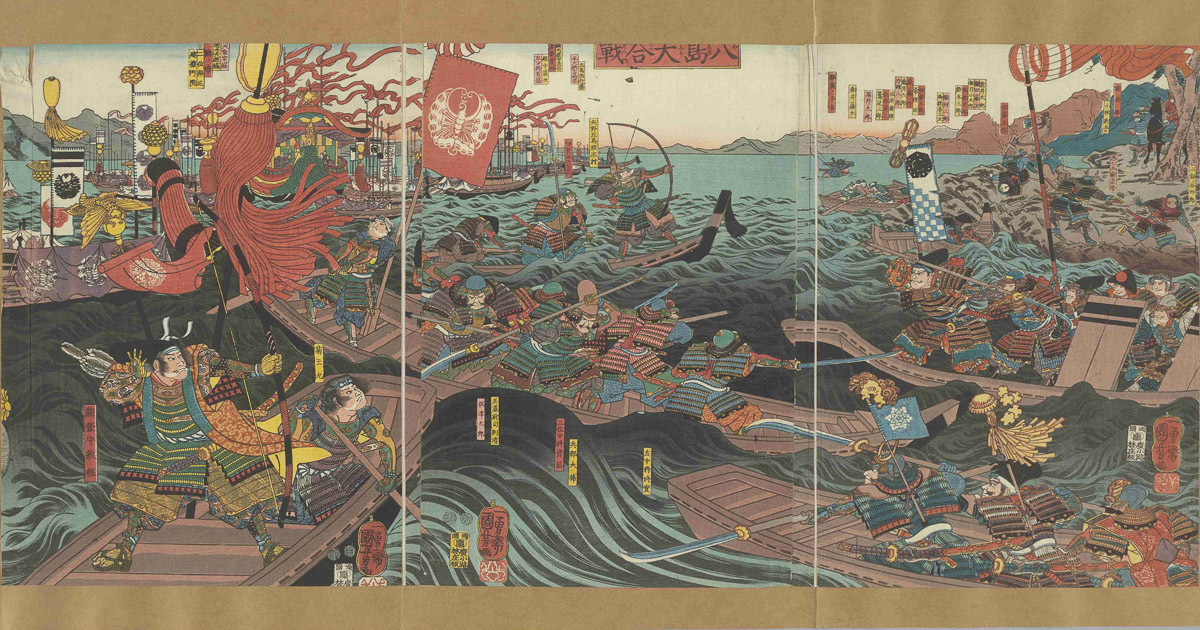
The Heart Sutra and the Forgotten Ears The head priest of the temple, realizing that Hoichi was being bewitched by spirits, painted the holy text of the Heart Sutra all over Hoichi's body as a charm to make him invisible to the ghosts. Unfortunately, he forgot to write the sutra on Hoichi's ears. That night, when the spirit came to fetch Hoichi, all it could see were a pair of ears floating in the dark. As proof to take back to his master, the spirit viciously tore off Hoichi's ears and vanished.
Reverence for the Unseen The true appeal of "Hoichi the Earless" lies not in mere gore or horror, but in its foundation of a Buddhist worldview, historical tragedy, and a deep psychological fear of the unseen. It beautifully reflects ancient Japanese spirituality, reminding us of the fragile boundary between life and death.